
Battery Metal Prices Surge in 2026: What the Recent Raw Material Rally Means for the Supply Chain
Global battery raw material markets have entered a pronounced upward cycle in 2026, with key metals and chemicals posting dramatic price increases amid tightening supply and robust demand from electric vehicles (EVs) and energy storage systems (ESS). The rally, most visible in lithium, cobalt, nickel, and lithium hexafluorophosphate (LiPF₆), is reshaping cost structures and forcing the industry to rethink sourcing, inventory, and long-term supply security.
1. Lithium: The Most Dramatic Year-to-Date Rally
Lithium carbonate, the cornerstone of modern battery production, has been the standout performer. As of mid-May 2026, battery‑grade lithium carbonate traded at approximately RMB 190,000–200,000 per tonne (USD 24,000–25,000/t), representing a year‑over‑year increase of over 200% and a year‑to‑date rise of roughly 60%. Compared with the cyclical low in mid‑2025 (around RMB 65,000/t), prices have more than tripled in 12 months.
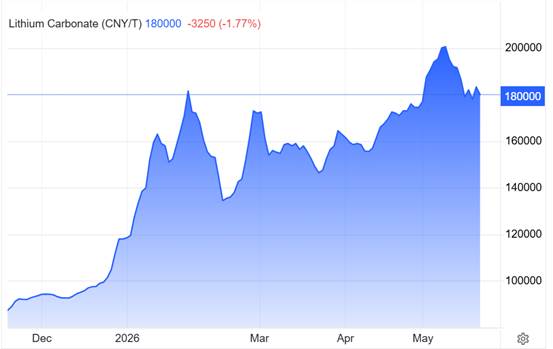
The surge is driven by: Production curtailments and mine maintenance in major Chinese lithium hubs; Strong EV and ESS demand, with 2026 global lithium demand expected to rise 14–16% YoY; A shift from oversupply to a projected 65,000‑tonne LCE deficit in 2026.
2. Cobalt, Nickel & Chemicals: Broad-Based Cost Pressures
The inflation has spread across the battery value chain:
Cobalt (99.8%): Stable at elevated levels, around RMB 429,000/t (USD 54,000/t) in late May 2026, supported by constrained Congolese supply and steady ternary cathode demand.
Nickel: Maintaining USD 19,000/t, near a two‑year high, on Indonesian export policy tightness and stainless steel/battery demand competition.
Lithium hexafluorophosphate (LiPF₆): One of the sharpest movers—prices jumped nearly 80% in May alone (from RMB 98,000/t to RMB 176,500/t), with industry inventories down to about one week of consumption.
3. Pressure for CNY appreciation
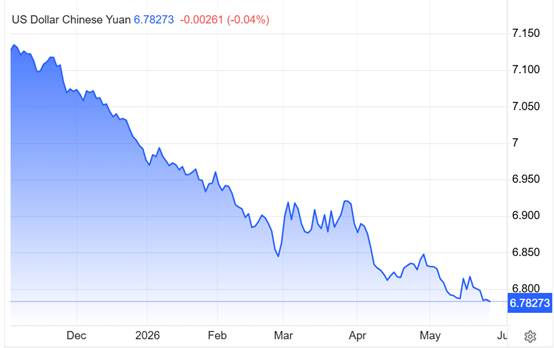
The offshore yuan edged higher to around 6.78 per dollar on Wednesday, returning to its strongest level since February 2023, buoyed by encouraging domestic economic data. Industrial profits in China jumped 18.2% year-on-year in January–April 2026, supported by robust demand for Chinese electronics and elevated oil prices linked to Middle East tensions
What This Means for Manufacturers
Higher raw material costs are translating directly into 30–50% higher cell costs and 25–40% higher battery pack costs compared to mid‑2025 levels. Downstream, automakers and energy storage integrators are facing price hikes and lead‑time extensions, while upstream producers prioritize long‑term contracts and supply chain resilience.
Outlook: Higher Costs, Tighter Supply, and Strategic Sourcing
Most analysts now agree the lithium market is in a multi‑year structural deficit, with UBS raising its 2026 lithium carbonate forecast to USD 26,000/t. Prices are expected to remain elevated through the second half of 2026, with potential tests of USD 30,000/t (RMB 250,000/t) in Q3 if demand stays strong.
For battery and EV players, the message is clear: supply security and cost predictability will define competitiveness in 2026–2027. Strategic inventory, diversified sourcing, and long‑term partnerships with reliable producers are no longer optional—they are essential.
EU Battery New Regulations Interpretation Series - 1
Spring Festival Holiday Notice
Related Article
